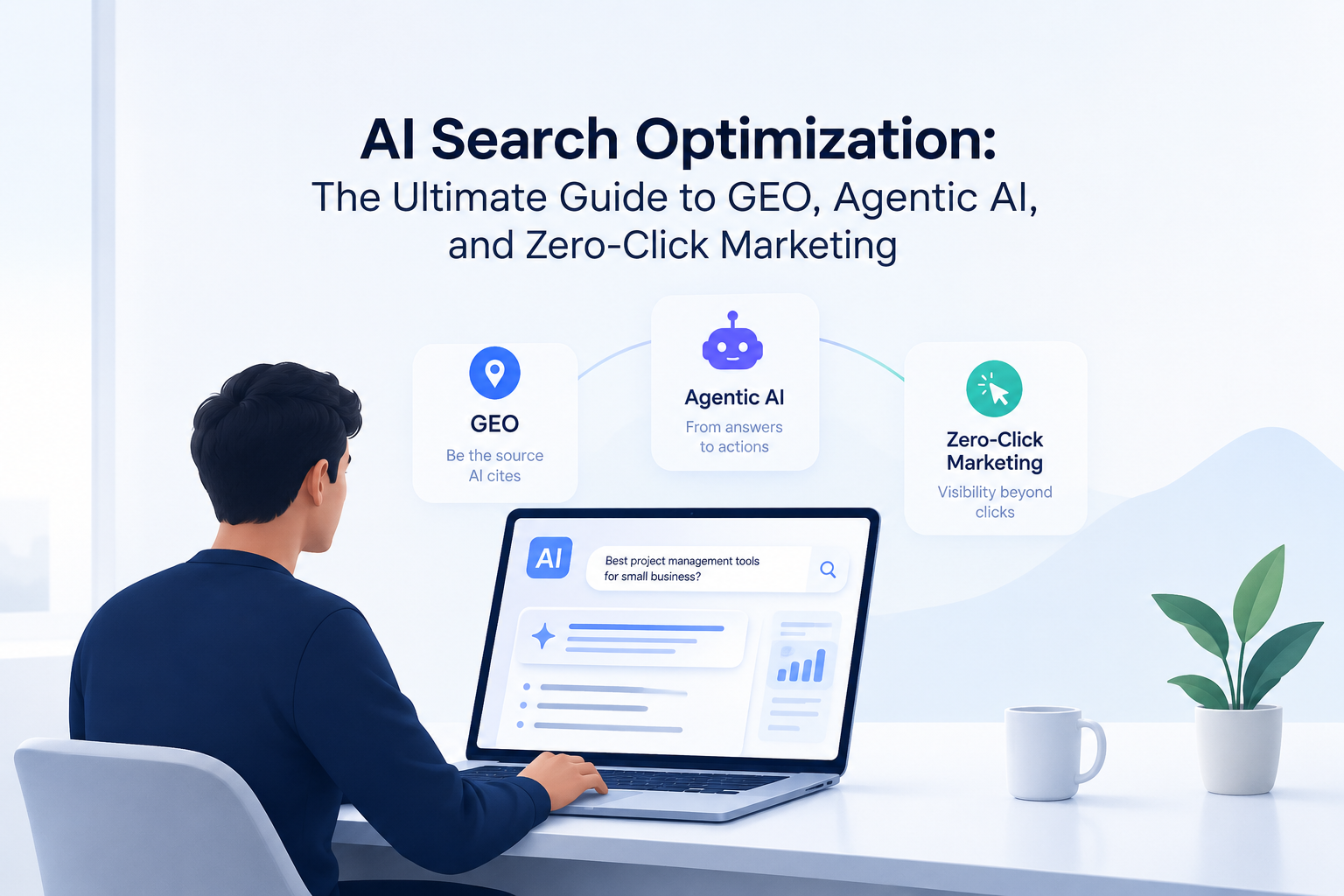

10 Powerful AI Search Optimization Strategies: The Ultimate Guide to GEO, Agentic AI, and Zero-Click Marketing
AI Search Optimization is transforming how brands get discovered as AI-powered search changes the way people find and evaluate information. From GEO and Agentic AI to zero-click marketing, these powerful strategies can help businesses build stronger visibility in the evolving search landscape.
Search is changing faster than most businesses realize. For years, online visibility was largely about ranking a website on Google, earning clicks, and turning those visitors into customers. But the rise of AI-powered search is changing that process.10 Powerful AI Search Optimization Strategies: The Ultimate Guide to GEO, Agentic AI, and Zero-Click Marketing
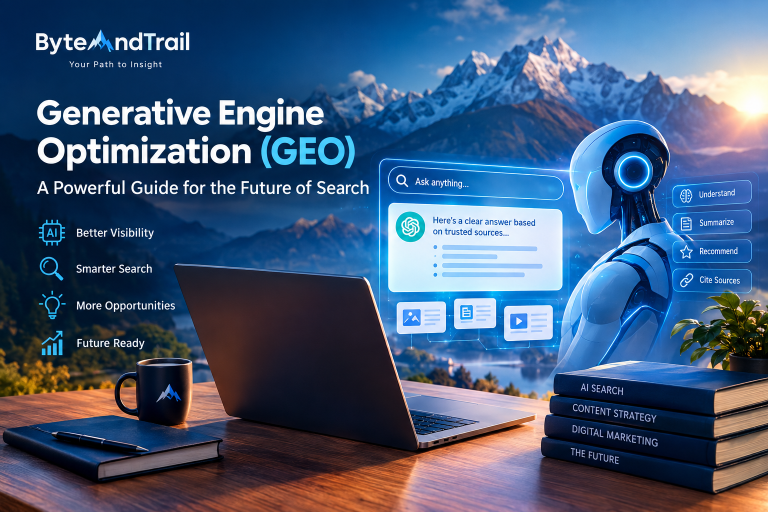
Today, people can ask ChatGPT, Google AI Overviews, Perplexity, Gemini, and other AI-powered platforms for answers without visiting several websites. At the same time, businesses are exploring Generative Engine Optimization (GEO), Agentic AI, and zero-click marketing to stay visible in this new search environment.
This is where AI Search Optimization becomes important.
Instead of optimizing only for traditional search engine rankings, businesses now need to think about how their content can be discovered, understood, summarized, and referenced by AI systems.
1. What Is AI Search Optimization?
AI Search Optimization is the practice of creating and structuring online content so that AI-powered search systems can understand and potentially use it when generating answers.
Traditional SEO focuses heavily on keywords, backlinks, technical performance, and search rankings. Those factors still matter, but AI search introduces another layer: machine understanding and answer visibility.
For example, someone might search:
“Which project management software is best for a small business?”
Instead of receiving ten blue links, an AI search system may provide a direct summary with several recommended platforms.
If your website is mentioned or cited in that answer, you may gain visibility even if the user never clicks your website.
That changes how marketers should think about search success.
2. GEO Is Becoming Part of Modern Search Strategy
Generative Engine Optimization (GEO) focuses on improving a brand’s chances of appearing in AI-generated answers.
GEO is related to SEO, but the goal is slightly different.
Traditional SEO asks:
“How can I rank higher?”
GEO asks:
“How can my content become a useful source for an AI-generated answer?”
That means content needs to be clear, accurate, well-structured, and supported by useful information.
For example, a technology company writing about cloud security should not simply repeat the phrase “cloud security” dozens of times. Instead, it can explain common risks, provide practical examples, compare approaches, and answer questions users actually ask.
AI systems can then better understand the subject and relationships between concepts.
3. Why AI Search Is Different From Traditional Google Search
Traditional search usually creates a journey like this:
Query → Search Results → Website → Click → Information
AI search can create a much shorter journey:
Question → AI Answer → Decision
This is one reason zero-click experiences are becoming increasingly important.
Users may ask an AI system about restaurants, software, financial concepts, travel ideas, products, or business strategies and receive enough information to make an initial decision without opening a webpage.
For marketers, this means traffic is no longer the only way to measure visibility.
Brand mentions, citations, recommendations, and appearances inside AI-generated answers can also become meaningful signals.
4. Agentic AI Could Change Search Even Further
The next major development is Agentic AI.
Unlike a traditional chatbot that mainly responds to prompts, an AI agent can potentially perform multiple steps toward completing a goal.
Imagine a user saying:
“Find me a good business laptop under $1,500, compare the options, and help me choose one.”
An agentic system could potentially research products, compare specifications, evaluate information, and assist with the next steps.
This creates a new challenge for businesses.
It may no longer be enough to create content that attracts human readers. Brands will increasingly need information that AI agents can easily discover, interpret, compare, and trust.
Clear product information, transparent pricing, detailed specifications, reviews, policies, and structured data can therefore become increasingly valuable.
5. Zero-Click Marketing Changes What “Visibility” Means
Zero-click marketing refers to situations where users receive the information they need directly from a search platform without clicking through to a website.
This can happen through:
- AI-generated answers
- Featured snippets
- Knowledge panels
- Local search information
- Product results
- Voice assistants
- Search summaries
At first glance, fewer clicks may sound like bad news for publishers and marketers.
But there is another side.
A user may see your company name several times through AI answers, search results, or recommendations before visiting your website later.
This makes brand visibility increasingly important alongside website traffic.
6. Create Content That Answers Real Questions
One of the strongest foundations of AI Search Optimization is simple: answer real questions clearly.
Instead of creating an article only because a keyword has high search volume, think about what the reader actually wants to know.
For example, instead of writing:
“AI Marketing Tools”
you could create:
“10 AI Marketing Tools That Can Save Small Businesses Time in 2026.”
Then answer practical questions throughout the article:
What does each tool do?
Who is it designed for?
What problem does it solve?
What are its limitations?
How much does it cost?
When should a business use it?
This type of detailed content gives both readers and AI systems more useful context.
7. Build Topical Authority Instead of Publishing Random Articles
AI search rewards understanding.
That means publishing one article about SEO, another about cryptocurrency, another about electric vehicles, and another about cooking may make it harder for a website to establish strong topical relationships.
A better approach is to build content clusters.
For example, a digital marketing website could create related content around:
- AI Search Optimization
- GEO strategies
- Technical SEO
- Content marketing
- AI marketing tools
- Zero-click search
- Search intent
- Digital PR
These articles can connect through internal links and create a broader knowledge structure.
Over time, this can help establish the website as a useful resource within a particular subject area.
8. Make Your Content Easy for AI Systems to Understand
Good AI Search Optimization does not require writing for robots.
In fact, the best approach is usually to make content easier for humans and machines to understand.
Use descriptive headings, short paragraphs, clear definitions, examples, tables when appropriate, and direct answers.
Avoid unnecessary jargon.
For important claims, provide trustworthy sources.
For products or services, clearly explain what they do instead of filling pages with vague marketing language.
Structured data can also help search engines understand specific information about a webpage.
The goal is simple: reduce ambiguity.
9. Original Information Can Become a Competitive Advantage
As AI-generated content becomes more common, original information can become increasingly valuable.
Anyone can produce a generic article saying that artificial intelligence is changing marketing.
It is much harder to produce:
- Original research
- First-hand testing
- Unique comparisons
- Expert interviews
- Proprietary data
- Real case studies
- Detailed experiments
For example, a marketing website could test five AI SEO tools and publish the actual workflow, results, strengths, limitations, and costs.
That creates information that is more difficult to replace with generic AI-generated text.
For American businesses competing in crowded markets, original expertise can become a powerful way to differentiate a brand.
10. The Future of AI Search Is About Being the Source Behind the Answer
AI Search Optimization is not simply another version of traditional SEO.
It represents a broader shift in how information is discovered.
Search engines are becoming answer engines. Chatbots are becoming research assistants. Agentic AI is beginning to move from answering questions toward completing tasks. At the same time, zero-click experiences are reducing the need for users to visit multiple websites.
Businesses should therefore think beyond rankings.
The bigger question is:
Can your brand become a trusted source that search engines, AI systems, and users recognize as useful?
The answer starts with strong fundamentals: useful content, clear structure, original information, credible sources, technical SEO, internal linking, and a deep understanding of search intent.
Final Thoughts
The future of search will not belong exclusively to websites that rank first on Google. Visibility will increasingly happen across traditional search results, AI-generated answers, conversational platforms, and agentic systems.
GEO, Agentic AI, and zero-click marketing are three important pieces of that transition.
Businesses that adapt early can focus less on chasing individual keywords and more on building information that deserves to be discovered, understood, and referenced.
AI Search Optimization is ultimately about one simple idea: make your brand useful enough to become part of the answer.

I am Bhaktahari Dahal, the founder and writer of Byte and Trail. I passionately research technology, blogging, and diverse fields to deliver clear, simplified, and engaging content for my readers. Welcome aboard!