

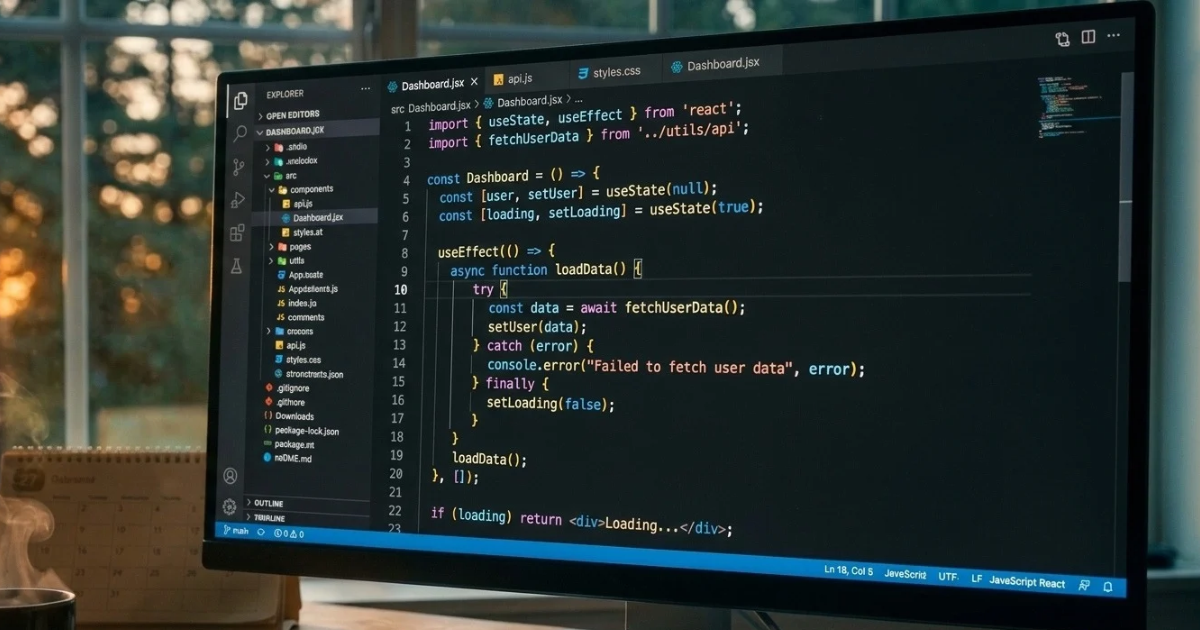

1. The Unbelievable Truth: Linus Torvalds AI Bug Discovery Found a 13-Year-Old Bug
The Linus Torvalds AI bug discovery sounds like tech folklore, but it happened this very October. To see why it matters, imagine you started a hobby project in 1991. Not a company, not a startup, just something you tinkered with because you were curious. Three decades later that hobby is running the phone in your pocket, the servers behind your favorite apps, and a big slice of the cloud. Thousands of engineers have read every line. Security teams hammer on it daily.
And yet, tucked inside one small corner of it, a few bugs just sat there. Quietly. For thirteen years.
That’s what came out this October. Linus Torvalds, the guy who created Linux, used modern AI tools to untangle a confusing chunk of kernel code. The cleanup confirmed one bug someone had reported, and then turned up three more nobody knew about. Every one of them went back to the first commit of that code in 2013 [1].
Now, if a random startup founder told you “AI found bugs,” you’d probably shrug. You’ve heard it before. But this is Linus. This is a man who has spent decades being gloriously unimpressed by hype. When he says a tool helped, it carries weight.
So pour yourself something warm, and let’s walk through what really happened, why it matters, and what the rest of us can borrow from it.
2. The Fearless Legend Who Never Bowed to Hype
If you don’t follow kernel gossip, here’s the short version. Linus built Linux, kept it growing for more than thirty years, and picked up a reputation for saying exactly what he thinks, usually without the diplomatic padding. Developers have strong opinions about their tools. Linus has strong opinions about everyone’s tools.
So when he warms up to something new, people pay attention, and not because he’s selling anything. He has no product, no sponsor to please, no keynote to give. All he has is a kernel that millions of people depend on, and every reason to be careful with it.
Phoronix, the site that tracks Linux news closely, has described him as getting more vocal lately about using AI and language models in his own work [1]. This past summer he went further on the mailing list: Linux isn’t an anti-AI project, and anyone who truly can’t live with that is welcome to fork it [4]. Classic Linus. Blunt, a little spicy, and completely unbothered.
What I like is what he didn’t say. He never claimed the tools are magic. He never said they should write the kernel unsupervised. His position is a lot simpler and, honestly, a lot more useful: a good tool is a good tool, so use it where it helps and stay responsible for the result.
3. The Brilliant Bug Report That Sparked Everything
Big stories often start small. This one started with a bug report.
A developer named Nils Ollrogge spotted a problem in a part of the kernel called assoc_array. It’s the code behind an associative array, which is basically a way for the kernel to look things up quickly. Nils did what good contributors do. He reported the issue and sent in a fix [1].
Then Linus read the patch and hit a wall. The code around it was obscure, with big dense functions that were hard to follow [1][5]. Think about that for a second. The creator of Linux looked at code inside his own project and had trouble reading it.
I find that oddly comforting. Anyone who has opened an old project and thought “who wrote this mess?” (only to discover it was them) knows the feeling. Old code is like a house that’s been renovated a dozen times by people who never met. Nobody remembers where the pipes run.
Plenty of maintainers, tired and busy, would have trusted the patch and moved on. Linus wanted to understand it first. That small decision, understand before you approve, is the quiet hero of this whole story.
4. The Genius Trick: Clean Up the Code Before You Judge It
So how do you understand code that’s too tangled to read? Simple. You untangle it.
Linus used LLM tools to help split those large functions into smaller, more readable pieces [1][5]. Notice what he did not ask. He didn’t type “find the bug for me.” He asked for help seeing the code clearly, which is a very different request.
It’s the difference between hunting for your keys in a messy room and clearing the floor first. Smaller pieces are easier to read. Readable code is easier to question. And once you can question it properly, problems tend to show their faces on their own.
I think this is the most underrated idea in the entire story. Most people picture AI as an answer machine: ask, receive, copy. Linus used it more like a very fast, very patient assistant who tidies the workbench so you can think. One approach makes you lean on the tool. The other makes you sharper.
You can try this tomorrow, and not just with code. A spreadsheet nobody understands, a contract full of nested clauses, a meeting transcript that rambles for an hour. Ask for structure first. Judgment comes second.
5. The Unbeatable Proof: Why the Linus Torvalds AI Bug Discovery Is Real
Here’s where the story parts ways with the usual AI hype.
Linus didn’t simply trust the neater code. He tested it, using a user-space test harness, which is a safe sandbox for running the code outside the kernel and watching how it behaves [5]. The tests confirmed Nils’s bug. Then, to everyone’s surprise, they exposed three more, all from the library’s first commit back in 2013 [1][5].
Put the sequence side by side. AI helped him read. Testing told him the truth.
That’s the part I’d tattoo on a wall if walls took tattoos. AI can be wrong, and it can be wrong in a calm, confident voice. A test doesn’t care about tone. It passes or it fails. Pair the speed of one with the honesty of the other and you get something genuinely strong.
If you remember only one line from this post, make it this one: let AI speed you up, but let evidence have the final word.
One honest note, since accuracy matters. The fixes live in a Git tag called assoc-array-fixes, and as of the latest reports they haven’t landed in the mainline kernel yet. They’re expected in an upcoming merge window [1][5]. The discovery is real. The paperwork just isn’t finished.
6. The Bold Experiment: Torvalds Teams Up With Claude Code
This wasn’t a one-time fling. It’s part of a pattern.
Shortly before the bug hunt, Linus used Claude Code to help draft patches and a test program for a deeper improvement to how the kernel reads files. A branch with “llm” right there in its name showed up in his source tree [1]. He didn’t hide it or dress it up. The name said what it was.
I really like that. In a world where plenty of people quietly use AI and hope nobody asks, here’s the best-known kernel developer on the planet labeling his tools out in the open. No chest-thumping, no apology. Just “this is how I did it.”
That kind of openness is a bigger deal than it looks. Open-source projects run on trust. If people can see how work was made, they can judge it fairly. If they can’t, they start guessing, and guessing is where suspicion grows.
So if you’ve ever worried that admitting you used AI makes you look lazy, think of this. The person with the most credibility in the room simply said what he used and let the results do the talking.
7. The Triumphant Debug Marathon: 24 Patches, 18 Reboots, Zero Surrender
My favorite story of the summer comes from August.
Linus was chasing a nasty problem in the Intel Xe graphics driver. On a Battlemage G21 graphics card, the amount of usable video memory didn’t line up with what the system expected, and the result was a display manager that kept restarting in an endless loop [3][6]. If you’ve ever watched a computer reboot itself into the same mistake over and over, you can feel the headache from here.
The hunt reportedly took 24 debugging patches and 18 kernel boots just to isolate the cause [3][6]. The final fix was tiny. The road to it was not.
Linus said the AI “enormously helped” [3]. Then came the line I can’t stop grinning about: several times, the AI told him the problem was impossible and unsolvable and that they should simply write a report. He joked that these tools were probably trained by people less stubborn than he is [3].
That’s a beautiful picture of how this partnership actually works. The tool was useful, and it was also wrong to give up. The human brought the one thing the machine lacked, which is plain old refusal to quit. The fix was merged into Linux 7.3 and marked for back-porting to stable branches [3].
Stubbornness plus a tireless helper. Turns out it’s a pretty strong team.
8. The Wake-Up Call: When AI Floods the Inbox
I’d be fibbing if I told you this story has no downside. It does, and Linus has been upfront about it.
Back in May, in the announcement for Linux 7.1-rc4, he said the kernel’s private security mailing list had turned “almost entirely unmanageable” [2]. The cause wasn’t mysterious. As stronger AI bug-finding tools spread this spring, lots of researchers pointed them at the kernel, and lots of them reported the same bugs. The list filled up with duplicates [2][7].
Picture a town hall where fifty people stand up, one after another, to announce the same pothole. The pothole is real. Everyone means well. But the small crew who has to actually fill it is buried under paperwork.
The ripple effects have shown up elsewhere too. Reports put the number of kernel CVEs near 2,000 per release, and distributions have been shipping record-sized security advisories [7]. In plain language, AI made finding bugs cheap and fast. That’s wonderful. But it also moved the bottleneck. Finding bugs is no longer the hard part. Sorting, checking, and fixing them is.
Honestly, it’s a good problem to have, because it means the tools work. It just means the humans on the receiving end need better habits and a lot more patience.
9. The Winning Advice: Do the Extra Work
So what did Linus actually recommend? Something refreshingly practical.
His point, in my words: if you found a bug with AI tools, there’s a good chance someone else found it too. If you want to add real value, go further. Read the documentation, write a patch, and bring something of your own on top of what the AI handed you [2].
I’d call this some of the best career advice of the decade, and it has nothing to do with Linux. The first draft is now cheap. Anybody can produce a bug report, a blog outline, a marketing plan, or a block of code in seconds. So the first draft stopped being what sets you apart. What sets you apart is the stuff after: judgment, checking, context, the actual fix.
Try this little test. Ask yourself, “If ten other people typed the same prompt, would my result look the same as theirs?” If yes, you’re not finished. Add your experience. Add your testing. Add your taste.
That’s the real takeaway from the Linus Torvalds AI bug discovery. The message isn’t “stay away from AI.” It’s “don’t stop at AI.” And I find that oddly encouraging, because it leaves the best part of the work in human hands.
10. The Powerful Mindset: Sparring Partner, Not Oracle
One writer summed up Linus’s approach as treating AI like a sparring partner instead of an oracle [4], and I haven’t been able to shake the image.
An oracle gives you answers from on high, and you’re supposed to believe them. A sparring partner pushes back, tests your moves, and makes you better, but you’re still the one standing in the ring when the bell rings.
Everything Linus did fits the second picture. He used the tool to read confusing code. He tested the results. He kept going when the tool said stop. And he stayed accountable for the final patch.
This matters because the biggest danger with AI isn’t that it’s useless. It’s that it’s convincing. A confident wrong answer can slide right past a tired person at five o’clock on a Friday. Treat the tool like an oracle and you stop checking. Treat it like a partner and your guard stays up.
Next time you use one of these tools, try asking yourself, “How would I prove this is true?” If you’ve got an answer, you’re working the way Linus does. If you don’t, slow down a little.
11. The Honest Debate Inside the Kernel Community
It’d be easy to assume everyone in the kernel world is either thrilled or terrified. Reality is more interesting than that.
Greg Kroah-Hartman, another well-known kernel maintainer, has said AI is becoming a genuinely useful tool for the open-source community [2]. Linus, in remarks at a recent conference in Prague, said AI bug-hunting is improving the code base, while also stressing maintainers to the point where it’s a real problem [4]. Both are true at once, and I find that reassuring. A healthy community can hold a benefit and a cost in the same hand without pretending either one isn’t there.
Even better, the community seems to be asking the right question. According to coverage of the recent Maintainer Summit, about three quarters of one day’s discussion focused on making AI generation and AI review less stressful and more useful [4]. Not “AI, yes or no?” but “AI, how do we do this well?”
If you manage a team, pay attention to that. They didn’t ban the tools, and they didn’t wave everything through either. They’re building norms: be open about what you used, check your work, and respect the humans who have to read it. That’s a blueprint worth stealing.
12. Six Proven Lessons You Can Use Tomorrow Morning
You don’t have to be a kernel hacker to get something out of this. Here’s what I’d keep.
Start by understanding. Before you ask an AI for answers, ask it to help you see the problem. Cleaner structure leads to sharper questions.
Check what matters. Linus used a test harness. You might use a second reviewer, a quick calculation, or a small experiment. Whatever the tool, let evidence settle arguments.
Say what you used. Naming your tools builds trust with customers, coworkers, and communities, and it costs nothing.
Bring something extra. If everyone has the same AI, your edge is judgment, context, and following through.
Be kind to whoever reads it next. Before you send something off, ask whether you’re saving that person time or handing them more work. Duplicate reports are the open-source version of “reply all.”
Stay stubborn. When the tool says it’s impossible, remember that sometimes it’s just giving up early. Persistence is still a superpower.
None of this is flashy. A startup, a classroom, a hospital, a newsroom, or a garage workshop could use every item on that list. The technology is new, but the habits are wonderfully old-fashioned: be curious, be careful, be honest.
13. The Brilliant Road Ahead After the Linus Torvalds AI Bug Discovery
So where does the Linus Torvalds AI bug discovery leave us?
My honest guess is a future where AI is simply part of how good software gets built and checked, and where the people we respect most are the ones who use it quietly and wisely instead of loudly. The kernel community is running a live experiment in how to do that at huge scale, with real stakes and plenty of smart skeptics watching.
The best case is genuinely exciting. Old bugs that survived a decade of human eyes get found and fixed. Dense, intimidating code becomes readable to the next generation of contributors. Maintainers get better ways to separate signal from noise. The software we all lean on every day becomes a little safer and a little more trustworthy.
And the lesson sitting in the middle of it is a hopeful one. The most experienced person in the room wasn’t threatened by a new tool. He got curious, tested it, kept his standards high, and told the truth about how it went. That’s a pretty good model for the rest of us, whether we’re staring at thirteen-year-old code or a blank page.
14. Your Winning Challenge
Here’s a small challenge before you close this tab.
This week, pick one confusing thing in your own work. A messy process, a tangled document, a stubborn piece of code, anything. Use an AI tool to help you understand it, not just to answer it. Then verify what you learned with a test, a second opinion, or a quick experiment.
If Linus Torvalds can find fresh bugs in a corner of the kernel that sat quietly for thirteen years, imagine what a little curiosity and care might uncover in your world.
References
[1] Phoronix. “Linus Torvalds ‘Did What I Preach’, Used AI To Make Code Decipherable & Uncovered More Bugs.” October 2026. https://www.phoronix.com/news/Linus-Torvalds-Assoc-Array
[2] The Register. “Linus Torvalds says AI-powered bug hunters have made Linux security mailing list ‘almost entirely unmanageable’.” May 18, 2026. https://www.theregister.com/security/2026/05/18/linus-torvalds-says-ai-powered-bug-hunters-have-made-linux-security-mailing-list-almost-entirely-unmanageable/5241633
[3] Slashdot (citing Phoronix). “Linus Torvalds Endures A Debug Session From Hell, ‘Enormously Helped’ By AI.” August 21, 2026. https://it.slashdot.org/story/26/08/21/1742239/linus-torvalds-endures-a-debug-session-from-hell-enormously-helped-by-ai
[4] aiera.blog. “Linus Torvalds Says AI Is Finding Bugs in the Linux Kernel.” October 2026. https://aiera.blog/linus-torvalds-ai-finds-linux-kernel-bugs/
[5] daily.dev. “Linus Torvalds ‘Did What I Preach’, Used AI To Make Code Decipherable & Uncovered More Bugs.” October 2026. https://daily.dev/posts/linus-torvalds-did-what-i-preach-used-ai-to-make-code-decipherable-uncovered-more-bugs-tsqqcmos3
[6] JournalArta Global. “Linus Torvalds Used AI to Trace a Linux Graphics Bug, Finding More Along the Way.” October 14, 2026. https://journalarta.com/en/2026/10/14/linus-torvalds-used-ai-to-trace-a-linux-graphics-bug-finding-more-along-the-way/
[7] Post-Cutoff. “Torvalds: the ‘continued flood of AI reports’ has made the Linux kernel security list ‘almost entirely unmanageable’.” May 17, 2026. https://postcutoff.com/e/2026-05-17-torvalds-ai-bug-reports-linux-security-list/
All sources accessed October 16, 2026.

I am Bhaktahari Dahal, the founder and writer of Byte and Trail. I passionately research technology, blogging, and diverse fields to deliver clear, simplified, and engaging content for my readers. Welcome aboard!